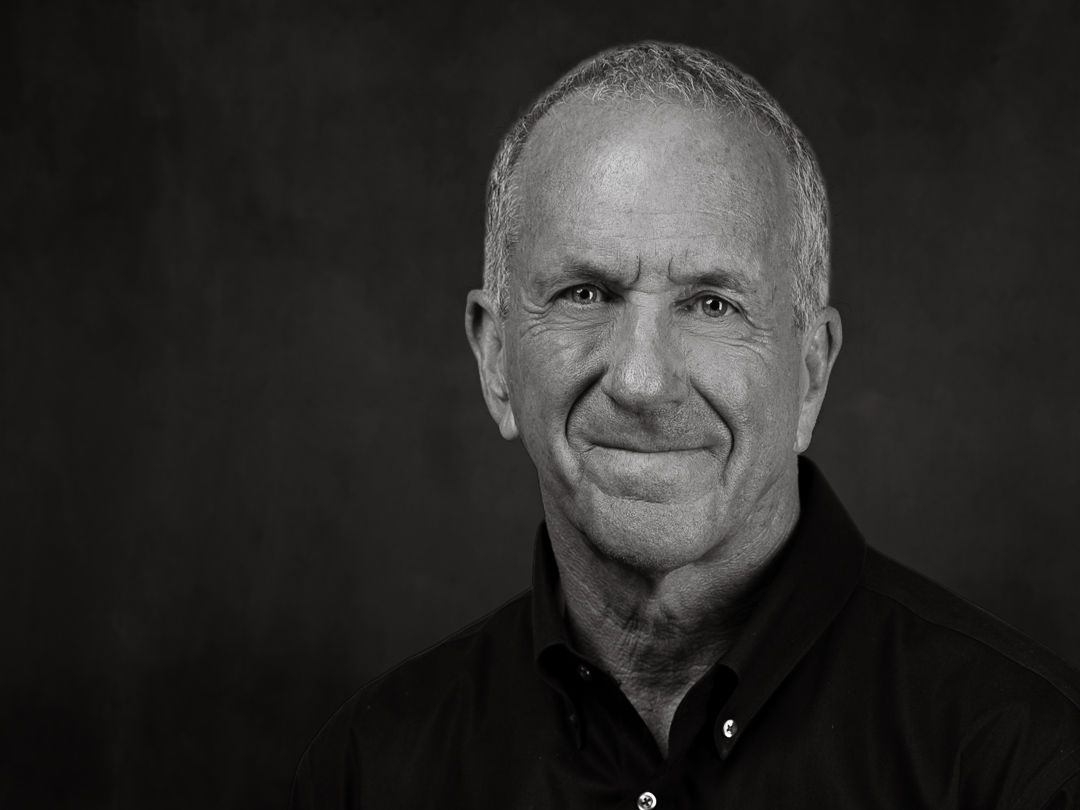
The Difference Between a Performative Smile and a Duchenne Smile; And Why It Matters in Your Headshot
Most of us know exactly what to do when someone points a camera at us.
We smile.
The problem is, the smile we give the camera isn't always the same smile we give when we're genuinely happy to see someone.
That difference can have a surprisingly large impact on a professional headshot.
The Performative Smile
Think about what happens when someone pulls out a phone and says, “Okay, smile!”
Almost automatically, the corners of your mouth go up. You hold the expression. The picture is taken.
That's a performative smile—you're smiling because you know you're being photographed.
There's nothing necessarily wrong with it. But it can sometimes look forced or disconnected because we're consciously creating the expression rather than naturally experiencing it.
The mouth may be smiling, but the rest of the face isn't necessarily participating.
And people are remarkably good at detecting that difference.
The Duchenne Smile
A genuine smile is often referred to as a Duchenne smile, named after 19th-century French physician Guillaume Duchenne, who studied facial expressions.
The important difference is what happens around the eyes.
With a genuine smile, the corners of the mouth rise, the cheeks lift, and muscles around the eyes become involved. You may notice slight crinkling at the outside corners of the eyes.
In other words, you're not just smiling with your mouth.
You're smiling with your eyes.
That's why two photographs of the same person—taken only seconds apart—can create completely different impressions.
Why This Matters in a Professional Headshot
Your professional headshot isn't primarily for people who already know you.
It's for people who don't know you yet.
Someone may encounter your photograph on LinkedIn, your company's website, an email signature, a business profile, or social media. Before they've spoken with you or learned much about you, they're already forming an impression.
A strong professional headshot should communicate two important qualities:
Confidence and competence.
You want to look capable, professional and trustworthy.
Approachability.
You also want to look like someone people would feel comfortable meeting, calling or doing business with.
That's where expression becomes so important.
Too serious, and you may appear distant or unapproachable.
Too much of a forced camera smile, and the photograph may not feel authentic.
The goal is to find the expression that communicates:
“I know what I'm doing—and I'm someone you'll enjoy working with.”
That's Why I Don't Just Say, “Smile!”
One of the most important parts of a professional headshot session happens before I press the shutter.
It's interaction.
We talk. We experiment with expressions. We make small adjustments to the eyes, mouth, chin and body position. And yes, sometimes we laugh.
The objective isn't to manufacture a smile.
It's to get past the camera smile and capture an expression that actually looks and feels like you.
That's also why I take more than one photograph during a headshot session. Tiny changes in expression can completely change the way a portrait feels.
Sometimes the difference between an average headshot and an exceptional one happens in a fraction of a second.
Take a Look at Your Current Headshot
Pull up the photograph you're currently using on LinkedIn or your professional profile.
Don't ask yourself whether you simply like the picture.
Instead, ask:
Do I look confident and competent?
Do I look approachable?
Does my expression feel genuine?
And perhaps most importantly:
If someone had never met me before, what would this photograph tell them about me?
Because your headshot may occupy only a tiny circle on someone's screen.
But the first impression it creates can be much bigger.
Make your first impression count.
True West Photos | Professional Headshots | Bakersfield, California